
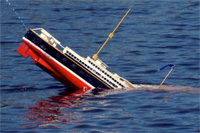
 I’ve worked at startups and I’ve worked at larger companies. I even worked at one company, VLSI Technology, where I joined it when it was a pre-IPO startup and left when it was thousands of people in tens of buildings. What is the difference? I think that the difference is best summed up in the jokey phrase “your end of the boat is sinking.”
People talk about the “risk” of joining a startup, but the main risk, unless you are vice-president level or you are joining before the company is funded, is simply that you’ll waste your time. You get paid pretty much the going rate for an engineer or a product marketing person or whatever you do. And you have some stock that will be worth a significant capital gain if the company is successful or nothing otherwise. If you are an executive, you get paid a lot less than the going rate in a big company. On the other hand, you have a lot of stock, 1-3% of the company for a vice-president, more for a hired-in CEO. Founders may have more than this depending on how much financing they end up needing to bring in. So for the senior people they really are losing something more than just time working for a startup.
Startups have two different dynamics from larger companies. The first is simply that they employ fewer people, pretty much by definition. Secondly, everyone’s personal and financial success, especially the management, is bound up in the success or otherwise of the company.
Employing fewer people means that in a startup there is nowhere to hide. Everyone knows everyone else and it is clear who is performing and who, if anyone, is trying to free-ride on everyone else’s efforts. In an environment like that, everyone is under pressure to perform. A startup can’t afford much headcount and if you are not going to perform at a high level, or for some other reason are not a good match, then it is best for the startup to find someone else who will.
The second dynamic, that everyone’s success is bound up with the company’s success, means that people naturally are working towards the same goal. Startups often struggle as to what that goal should be, and different management teams do more or less well at communicating it, but it is not necessary on a daily basis to micromanage everyone’s priorities. The natural DNA of a company that makes it operate in a particular way, which can be such a weakness in an Innovator’s Dilemma situation, is a benefit here. If you don’t tell people what to do there is a good chance they’ll do what they should do anyway.
In a larger company, your success as an individual (unless you are in senior management) comes largely from doing what your boss expects you to do. This may or may not have something directly to do with the success of the company, but it is not your job to second-guess that. If you want a salary increase and promotion you must work within the system.
So in a startup you don’t get “your end of the boat is sinking” behavior where people do what is good for their workgroup (division, site, product) at the expense of the good of the company. In a startup, where the boat is much smaller, everyone sees that the boat either floats or sinks and everyone is in it together. As a result, I find working in a startup is more fun than working in a larger company, at least unless you get senior enough to affect the large company strategy.
 A startup EDA company needs about $7M in bookings to become self-sustaining and not require another round of external funding. Curiously, it doesn’t seem to depend all that much on the product provided there is really a market out there, which, of course is by no means a given. And more funding can always be an accelerator to growth even if slow growth would have been possible without it.
 The DAC newsletter had a recent
 Doug Fairbairn was at Xerox PARC (along with Lynn Conway of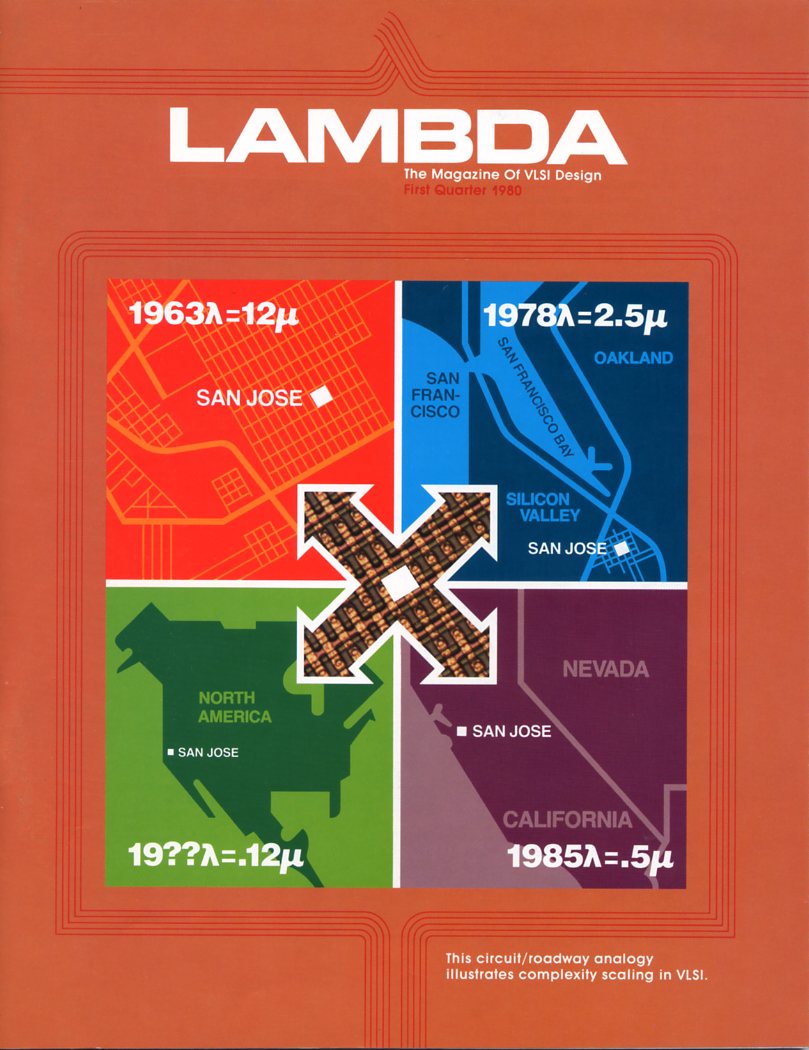
 My father-in-law was an executive at Wedgwood and responsible, among other things, for pricing every piece of china they made. Wedgwood has recently been run into the ground by Waterford Crystal who had acquired it, and it is now in administration (roughly chapter 11), but that is another story.

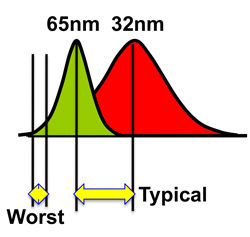 I like to say that “you can’t ignore the physics any more” to point out that we have to worry about lots of physical effects that we never needed to consider. But “you can’t ignore the statistics any more” would be another good rallying cry.
 I’m not sure I really get Twitter completely. I think it’s an age thing. People brought up in Britain never get root beer; people brought up in America never get Marmite. Maybe you have to tweet before the age of 40 or something (which would have been impossible in my case).